Tile Roof Replacement in North Rialto from $7,000. Concrete tile outlasts the felt beneath it by decades. Replacing the felt is the job; replacing the tile usually is not. Free inspection and a written quote.
Tile on the newer subdivisions is generally on synthetic underlayment rather than felt, and synthetic does not go brittle on the felt timetable. So a leak under tile up here is far more likely to be a flashing, a valley or a penetration than the underlayment reaching the end of its life -- which makes it a repair rather than a relay.
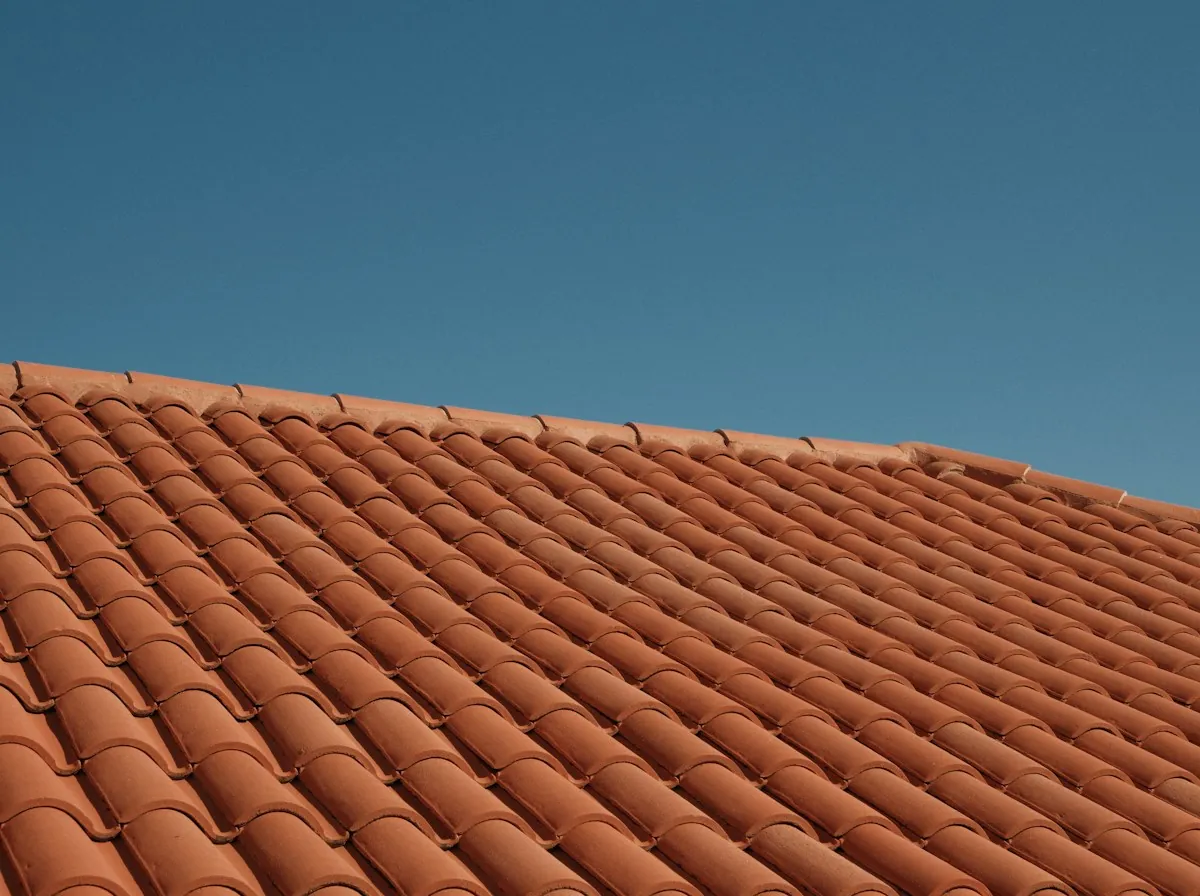
Concrete tile is a large share of Inland Empire tract housing and it outlives the underlayment beneath it by decades. A tile field that looks sound from the street can be sitting on felt that has gone brittle and torn, which is why these roofs leak with no broken tile anywhere near the stain.


A lift and relay -- your own tile back down over new underlayment -- runs $7,000 to $19,000 here against $26,000 to $52,000 for a full tile replacement. In a climate that kills felt faster than it kills tile, that single question is worth more than every other decision on this page. Newer subdivision houses are the likeliest in the city to be exempt already, because recent energy standards mean decent attic insulation and sealed ducts. Worth confirming before you pay a premium for a rating you do not need.
If the tile is sound and only the felt beneath has failed, the relay is the right job at roughly half the cost. We count the salvageable tile before quoting either.
Most Inland Empire tile is 1970s-onward concrete in profiles still manufactured, so breakage is replaceable and the relay stays viable. That is not true of genuinely period clay.
A replacement price with no mention of your existing tile is a price for buying tile you already own. Ask whether a relay was considered and why it was ruled out.
Newer does not mean exempt. A roof built in the last twenty years is still subject to the same cool-roof requirement the moment you replace half of it, and the more complex hip-and-valley geometry on these houses means more detailing per square foot than the older streets. What newer does usually mean is a plywood deck and modern flashings, which keeps the price the right side of the range.
North Rialto is where the city's most recent subdivision building has happened, so the roofs there are younger and the geometry is busier than in the older tracts.
This is a replacement company saying so. In this climate the most expensive mistake is buying the whole roof when the job was the felt underneath it.
A tile roof quoted at $26,000 to $52,000 is very often a $7,000 to $19,000 lift and relay, because concrete outlives felt by decades and zone 10 heat widens that gap further. Somebody has to count your tile before that question can be answered.
If the complaint is an unbearable upstairs rather than a leak, attic insulation and ventilation will usually do more than a new covering -- and it happens to exempt you from the cool-roof requirement as well.
We will say so when it is, and it is the same piece of advice as the opposite one: worth nothing unless you are shown what it rests on.
Newer does not mean exempt.
Newer subdivision houses are the most likely in the city to be exempt already, and almost nobody checks.
Architectural shingle on the newer subdivisions has a much better seal line than the three-tab it replaced, so failures up here are localized rather than across a slope.
The low slope on newer subdivision houses is usually a small section -- a porch, a link between wings, a covered entry -- and on its own it stays under the trigger.
Complex subdivision geometry gives you real partial boundaries: separate roof planes over a garage wing or a projecting bedroom that can be done independently.
Zone 10. The cool-roof rule applies to your pitched roof.
Its own city, its own building department.
Unincorporated. County permits, and more than one roof.
The oldest stock here. Check the deck first.
A century of building ages in one city.
Semi-rural, unincorporated, outbuildings everywhere.
Canyon country. Brush interface and county permits.
The questions that come up, before you have to ask.
Because the leak is under it. Concrete tile outlasts the felt beneath it by decades, and zone 10 heat widens that gap. The underlayment tears and goes brittle while the tile field above still looks new from the street -- the commonest tile failure in this valley and not visible from the ground.
Some, yes, and any honest quote says so up front with a breakage allowance. The useful part is that most Inland Empire tile is concrete in profiles still manufactured, so broken pieces can be matched and a relay stays viable.
Probably yes, and this is the main way Rialto differs from Los Angeles. Rialto is Title 24 climate zone 10, and the steep-slope cool-roof requirement applies in zones 10 through 15 -- so your pitched roof is in scope once you replace 50% or more of it. The minimum is aged solar reflectance 0.20 and thermal emittance 0.75, or SRI 16.
There are four documented exceptions and they are worth checking before you pay a product premium: an addition with under 300 square feet of roofing, an attic radiant barrier, R-20 or better attic insulation, or properly sealed ducts. On a house with decent attic insulation you may already be compliant.
It depends on the address, and people get this wrong constantly. Rialto, Fontana, Colton and San Bernardino are incorporated cities with their own building departments. Bloomington, Muscoy and Lytle Creek are unincorporated San Bernardino County. We pull it either way, but a contractor who files in the wrong place costs you a week.
Free inspection, and a written quote against a written scope. Aged ratings quoted from the CRRC listing, never initial ones.