Flat Roof Replacement in Lytle Creek from $2.50. Low slope over additions, patio covers and carports -- the strictest cool-roof rule of all. Free inspection and a written quote.
A flat roof in a brush interface collects what blows off the hillside, and debris in the corners of a low-slope roof is a drainage problem and a fire one at the same time. The detail that matters up here is the parapet corner and the outlet rather than the field of the membrane.
Most low slope here is residential: rear additions, converted garages, carport roofs and patio covers tied into the main house. All of it sheds water slowly, so it depends on the drainage rather than on gravity.


If the substrate is sound and dry, a coating at $2.50 to $6.50 per square foot is often the right answer. What is not optional is the rating: low slope needs aged SRI 75 or better in every California climate zone, which is a much higher bar than the steep-slope 16 that applies to the rest of your roof. Two canyon-specific costs. A Class A assembly where the parcel sits in a fire zone, at roughly $1 to $5 per square foot extra. And staged material delivery, because a full load cannot reach most properties up here in one go.
A sound, dry substrate can be coated. Coating a wet one seals the moisture in and buys about a year, so we establish which you have before quoting either.
Fall that has to be rebuilt rather than re-covered, wet insulation, new or enlarged outlets, and long spans where deflection has taken the fall away.
Steep slope needs aged SRI 16. Low slope needs aged SRI 75. They are not interchangeable and a quote that cites one for the other has not read the code.
Two things change up here. The brush interface makes the fire-zone question real rather than theoretical -- inside a Very High Fire Hazard Severity Zone a re-roof is a Class A assembly under Chapter 7A, not a product preference, and you should check your own parcel on the state map. And canyon access means material staged in stages rather than dropped in one load.
Lytle Creek is unincorporated foothill country with brush on its margins, so both the permit route and the fire-assembly question differ from the valley floor.
Worth knowing before you start ringing round, and worth factoring into anything with a deadline on it.
Inland Empire roofs do not fail in storms, they fail in August. Months of zone 10 sun take the plasticiser out of asphalt and cook the felt under tile, and none of it shows until the first serious rain finds all of it at once. Most emergency calls here are the bill for a summer nobody could see.
Two things change in the canyon.
In the canyon the cool-roof requirement meets the fire requirement, and inside a Very High Fire Hazard Severity Zone the Class A assembly is the binding constraint.
Canyon wind lifts tile, and lifted tile is cracked tile by the time anyone looks.
Canyon wind creases shingle seal lines and the damage is invisible from the ground -- the tab lifts, creases and drops back flat.
Canyon wind damage is localized by nature -- it hits the exposed slope and leaves the sheltered one alone -- so a single-slope partial is the common and correct job up here.
Zone 10. The cool-roof rule applies to your pitched roof.
Newest subdivisions, busiest geometry, plywood decks.
Its own city, its own building department.
Unincorporated. County permits, and more than one roof.
The oldest stock here. Check the deck first.
A century of building ages in one city.
Semi-rural, unincorporated, outbuildings everywhere.
The questions that come up, before you have to ask.
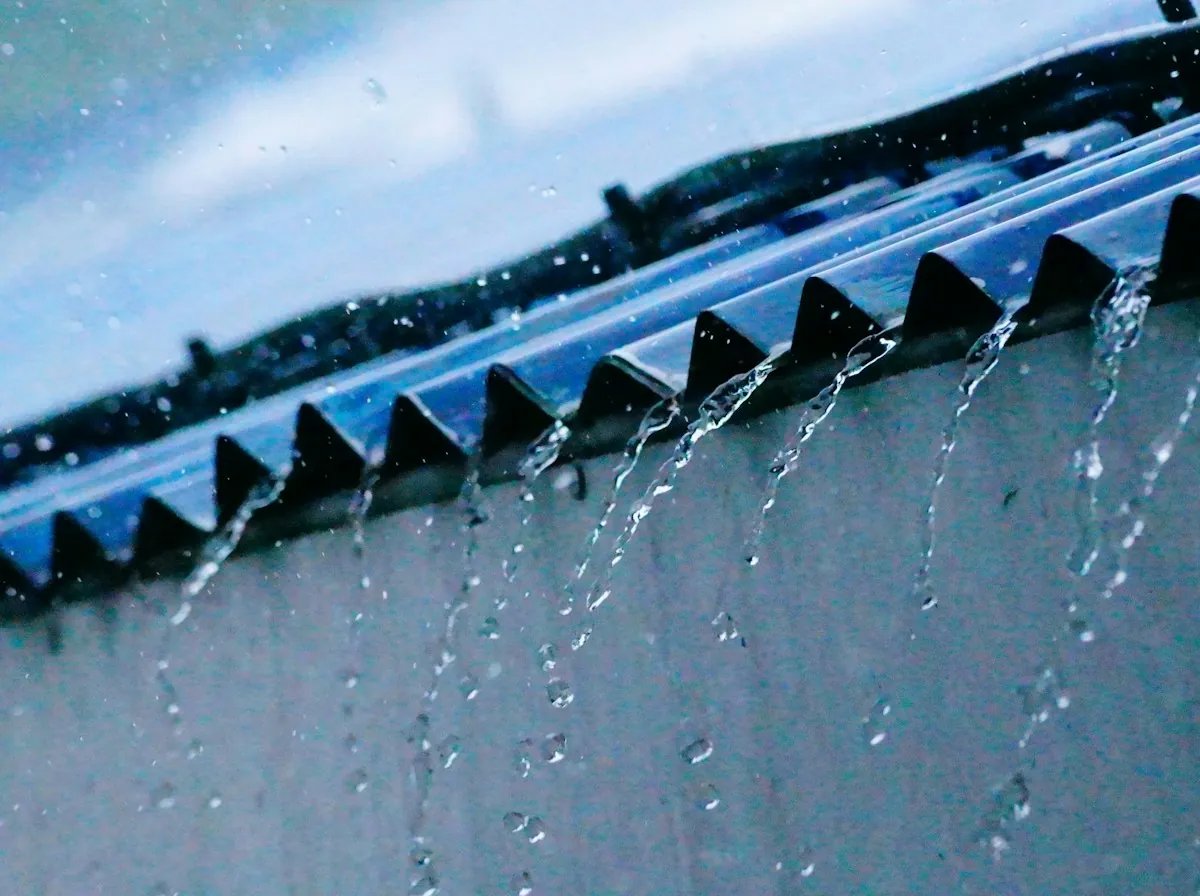
More urgent here than on the coast. Water still sitting 48 hours after rain means the fall is wrong or a drain is blocked -- and standing water plus zone 10 sun degrades a membrane far faster than either alone.
Because low slope faces the sun directly all day and the code reflects that. Steep slope needs aged SRI 16; low slope needs aged SRI 75, in every California climate zone with no exemption. They are different numbers for different geometry, and quotes confuse them constantly.
No. The inspection is free, the written quote is free, and there is no obligation attached to either. What we will not do is give you a price at the door without going up, or quote a cool roof without first checking whether an exception already applies to your house.
Typically $9,000 to $22,000. The Inland Empire sits below the Los Angeles basin on labor and above the High Desert, so an LA average reads high here and a national average reads low. Composition runs about $6 to $9.50 per square foot, tile considerably more.
There are four documented exceptions and they are worth checking before you pay a product premium: an addition with under 300 square feet of roofing, an attic radiant barrier, R-20 or better attic insulation, or properly sealed ducts. On a house with decent attic insulation you may already be compliant.
Free inspection, and a written quote against a written scope. Aged ratings quoted from the CRRC listing, never initial ones.